acrylic displays
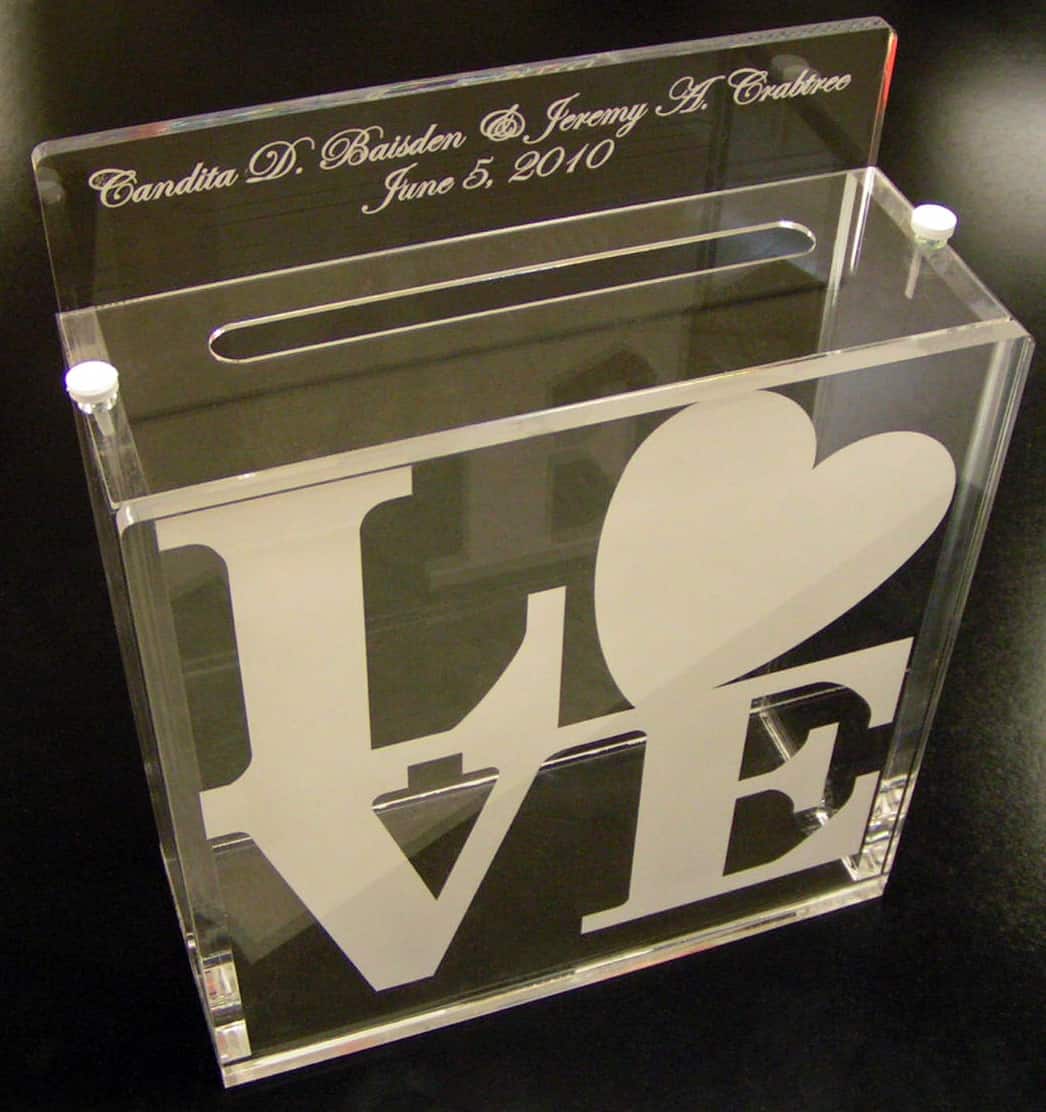
Laser Cutting Shapes can cut and bend acrylic for any particular display that you have in mind. We offer a number of designs for many different applications. These include pedistals, boxes, shoestands, museum cases, and many more.
architectural models
Laser Cutting Shapes offers cutting services to Architects, Industrial Designers, R&D departments, etc. We can cut intricate designs into various materials for your models, mock-ups, prototypes, etc.
biomedical fixtures
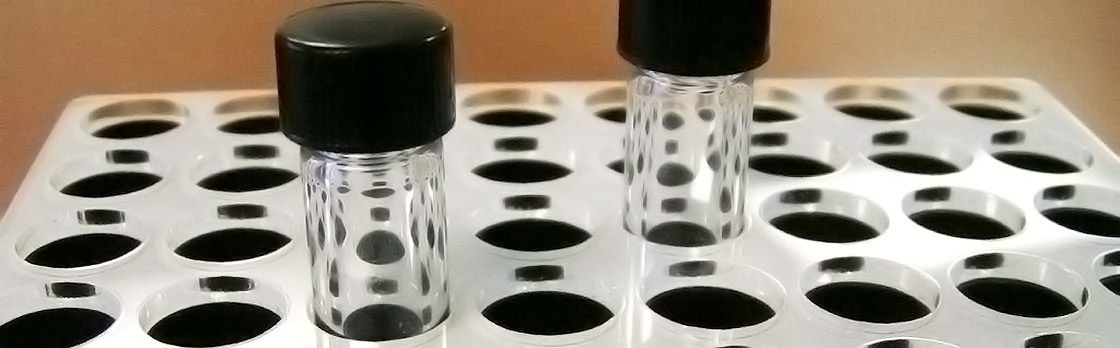
laser Cutting Shapes is developing innovative fixtures for scientists. We are paying particular attention to each minuscule detail.
With more than 15 years of product design in hi-tech and medical device industry, we are offering an excellent knowledge of materials and manufacturing methods.
cutting acrylic letters
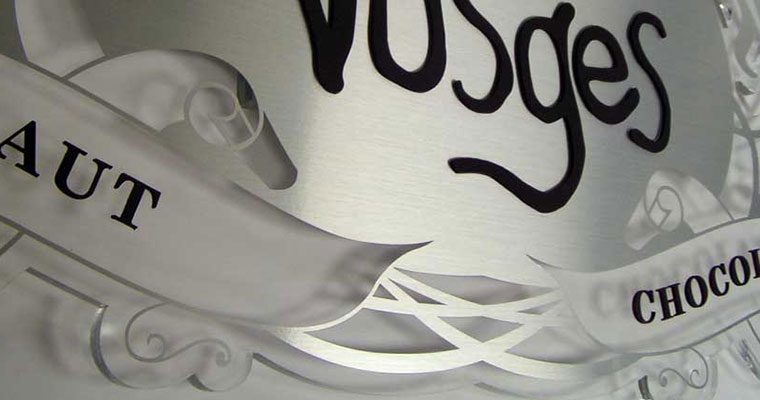
Laser Cutting Shapes can cut acrylic lettering that has perfectly polished edges inside and out. This is superior to conventional CNC routing which leaves a rough milky looking edge.
cutting bronze mesh
Using Synrad lasers for cutting Bronze mesh! Although Bronze is a highly reflective material, we were able to cut the 0.028 thick mesh using a Synrad 240W CO2 laser and 40 psi Oxygen assist gas at a speed of 7 inches per minute. We were able to increase the cutting speed to 32 inches per minute by simply placing a 0.01 thick sheet of paper on top of the mesh.
cutting compressed polystyrene
Clean laser cuts with minimal melt back in compressed Polystyrene using a Synrad Evolution 240W laser. Polystyrene is a ubiquitous plastic found in everything from computers, to automotive parts, to toys and other consumer products.
cutting fabric housing
The outer 0.055” thick housing, consisting of 50% Nomex and 50% Polyester, was cut from the braided steel hose shown using a Synrad 25W laser. The polyester content in the fabric helps to provide a sealed cut end. To achieve these results we used a Synrad 25W laser with the UC-2000 controller along with 10 psi air assist gas.
cutting foam blocks
Synrad lasers produced smooth edges in foam block. A 2.125" tall foam block exhibited clean cuts after being laser cut at a speed of 20 inches per minute.
cutting plastic fabric
Sealed edges created on plastic mesh using Synrad CO2 lasers!
This particular fabric is commonly used for outdoor patio awnings, RV awnings, and furniture.
cutting rubber coated aluminum
A test shape was "kiss-cut" out of this rubber material. Because bare aluminum is reflective to the 10.6 micron CO2 wavelength, it makes an excellent backing plate for many CO2 laser applications. In this case, a 0.013" thick rubberized coating used in the aerospace industry was applied to an aluminum plate so that specialized geometric shapes could be "kiss-cut" out of the rubber material. Test shapes such as circles, squares, and rounded rectangles were cut at mark velocities ranging from 28 to 35 inches per second. All shapes cut from the rubber exhibit cleanly cut edges.
cutting stencils
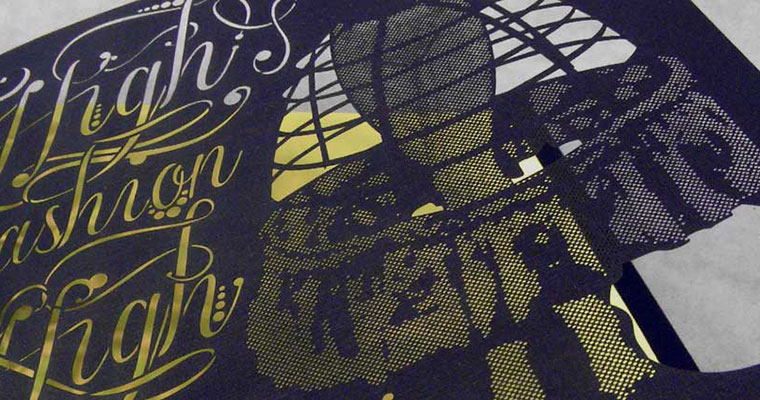
Stencil cutting is another creative CO2 laser application made easier due to the simplicity of changing or customizing designs seen on paper, cardstock, or plastic templates. Paper edges cut cleanly and exhibit no discoloration. The industrial side of stencil cutting is gasket making. Although generally made from thicker (and often, multilayer or composite) materials, gaskets are similar to stencils in that the CO2 laser system is easily programmed to cut contours and trepan mounting holes precisely and repeatably.
degating acrylic parts
Clear acrylic parts are degated (trimmed) from their injection molding sprues using 50 watts of power at a speed of nine inches per second. WinMark Pro was set to produce two mark passes in order to minimize melt back on the degated edge, creating an overall cycle time of 0.14 seconds.
engraving wood
This handgrip pattern was engraved on a hardwood handle using 60 watts of power delivered through an FH Series marking head. In order to achieve the require depth and texture in the sycamore stock, the mark file was designed to deliver four passes at a marking velocity of eight inches per second. Total cycle time for engraving the 1-inch by four-inch pattern was 62 seconds.
interior design
Laser Cutting Shapes offers many laser cutting applications for Interior designers. We cut and etch a variety of materials and can work with Interior Designers to help them in realizing their aesthetic environments. From the smallest detailed object to full wall etchings, we join high technology with artistic beauty.
"invisible" marking on acrylic
Need to mark text or identifying information on acrylic parts without detracting from the look of the piece? This "invisible" mark can only be viewed when tilted at the correct angle in a well- lit environment. This can be accompished easily with a co2 laser.
laser cutting fabrics
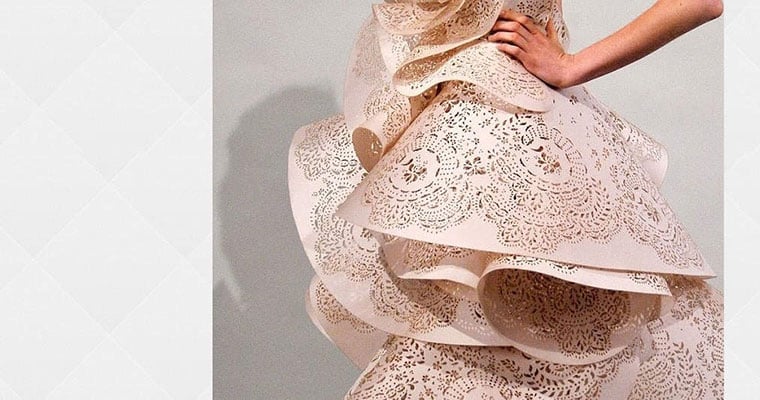
Laser Cutting Shapes offers textile cutting services to Fashion Designers, Seamstresses, Artists, Craftsmen, etc. We can cut most any fabric with superior detail and edge finish over the competition. The edges of fabrics cut by conventional means leaves them prone to fraying and falling apart. Laser cutting seals the edges of even the most difficult of fabrics such as silk, nylon, leather, denim, cotton, etc.
laser etching images on glass
A sandblasted look can be created on glass by etching it with a laser. A 370 mm lens with a 540-micron spot allows us to obtain a "sandblasted" image as large as 9.5 by 11.7 inches. Text, Bar Codes, and Data Matrix codes can also be laser marked on glass to resemble sandblasting.
marking 2D codes on FR4
Laser etching 2-D data matrix codes is widely used in the electronics industry, thanks to their ability to pack a large amount of information into a very small space. Compared to 1-D codes, these codes feature high data density and improved readability. FR4, which has the best overall physical, thermal, and electrical properties for circuit board applications, is a flame-retardant general grade laminate created from alkali-free glass cloth coated with epoxy resin and cured under pressure and heat. In addition to providing a good substrate for text and 2D code marking, FR4 can be laser-cut, although edges typically exhibit varying levels of discoloration of charring.
marking 2D codes on stainless steel
This application required encoding a 10-digit part number into a Data Matrix ECC200 2D bar code on a stainless steel part. The task was accomplished by using 120 watts of power focused through an FH Series marking head. We created the 0.375" + 0.375" square 2D code using WinMark Pro Laser Marking Software, setting Velocity to seven inches per second and Resolution to 300. Cycle time for the raster-scanned 2D code was 4.8 seconds. The code is easily readable using a barcode vision system even though the reader "sees" mark contrast values as low as 20% on the highly reflective stainless surface.
laser marking cardboard
This business card size cardboard sample was marked using a 50W laser and FH Marking Head in a cycle time of 5 seconds. With highly visible dark marks, text and graphic images are easily surface marked.
marking ceramic components
A 2.5 mm x 3 mm ceramic capacitor was marked using 9W of laser power at a speed of 9 IPS. The electronics industry uses miniature surface-mount components extensively in the manufacture of circuit boards. This large (2.5 mm x 3 mm) ceramic capacitor was marked using an FH-Series marking head equipped with an 80 mm lens. Eight numeric stroke characters were marked on the face of the capacitor by the 116-micron diameter focused beam. Marking was accomplished in a cycle time of 0.35 seconds using nine watts of power at a velocity of 9 IPS.
marking lacquered aluminum
Contrasting marks were created on a lacquered aluminum cap
Sealed CO2 lasers are useful in a wide range of applications in the packaging industry. The lacquered aluminum cap in the photo on the left was marked using a Synrad 25W sealed CO2 laser and FH Series Marking Head. The cap provided clean contrasting marks using 22W of power at 35 inches per second. Focusing was through a 125 mm lens that provided a 180-micron spot, with a 3 mm depth of focus. The seven-character mark, 0.085 inches high, was marked in a cycle time of 0.14 seconds.
marking lithography frames
The CO2 laser mark actually bleaches the anodized coating and because the coating is not removed, the aluminum frame remains electrically insulated and protected from corrosion. The major advantage of the CO2 wavelength vs. the shorter YAG wavelength is that the anodized coating is left intact. The ten character barcode was marked at a speed of 100 inches per second with a resolution of 425 dpi resulting in a cycle time of 3.8 seconds.
marking photographic film
This roll of 35 mm photographic film is easily marked using a Synrad sealed CO2 laser and FH Series marking head driven by WinMark Pro laser marking software.
Three separate stroke text objects, each 2 mm high, were marked at a velocity of 75 inches per second. Overall cycle time for marking 20 characters spanning an area of 2.125 x 1.25 inches was 0.3 seconds.
marking printing plates
Flexible printing plates, developed from various plastic or rubber compounds, are used by many companies to print products, cartons, etc., during the manufacturing or packaging process. The flexible plate picks up and holds ink in the engraved areas of the plate and transfers this image to the part or, more commonly, to a transfer roller or pad that then deposits the inked image onto the product. Marking speed and velocity determine the engraved depth of the image, which helps to control ink deposition on the product.
marking saw blades
While engraved marks on thin metal could potentially weaken the strength of the material, these permanent contrasting marks were created on the surface of the blade leaving the strength of the material unaffected. The readable contrasting marks on the saw blade are created using a Synrad 125W laser at a speed of 4.5 inches per second with a resolution of 425 dpi.
marking tires
Crisp readable marks can be created on tires with Synrad lasers! Using a 125W laser, FH Marking head, and 200 mm lens, the engraved marks (approximately 10 mm high) were created at a speed of 25 inches per second using a resolution of 250 dpi, with a cycle time of 4.7 seconds. The same quality of marks can be achieved at a speed of 5 inches per second using 25W of power and a cycle time of 16.6 seconds.
marking ultem
Incredibly small text (0.041"-high) was marked on this Ultem part with a Synrad laser and marking head. Well-known for its high strength and excellent heat resistance, Ultem is a plastic that is commonly used in the manufacture of electrical components and medical devices. The engraved mark was made at a speed of 40 inches per second, with a total cycle time of 0.21 seconds.
public directional signage
aser Cutting Shapes cuts a variety of public directional signage applications. We have an extensive library of public directional signs and can fabricate signs from our inventory or according to your design.
Some pictogram examples from our library include:
Telephone, Mail, Currency Exchange, Cashier, First Aid, Lost & Found, Coat Check, Lockers, Elevator, Toilets, Toilets Men, Toilets Women, Nursery, Information, Cofeeshop, No Smoking, Smoking, and Litter Disposal.
signage
Laser Cutting Shapes offers many options to the Sign industry. We can cut many different materials with superior detailing results over the competition. We use LED lights in our signs which use about one tenth the energy of conventional lighting and last longer making them “green” and eco-friendly for the environment. We can cut, assemble, and install your signs in a timely manner and to your exact specs. Laser cutting Shapes also offers vinyl applications for windows and displays. Just contact us with your particular sign needs and we will work with you to fulfill all of your signage needs.
"Tip Processing" Applied to Drilling
CO2 lasers excel at drilling small holes (small defined as less than 0.01" in diameter). Small holes are drilled directly without trepanning, resulting in reduced cycle times. Direct drilling also highlights one of the unique characteristics of lasers - the focused spot from a single laser can produce a range of hole sizes in a range of different materials.
The term "tip processing" means that only the central part of the Gaussian beam is used for drilling. As the circular diameter of the Gaussian, beam decreases, the power density at the outer edge increases. This power density level corresponds to an effective beam diameter. For a Synrad laser, the 10.6 micron CO2 wavelength allows spot sizes as small as 100 microns without the addition of specialized optics.
visible mirror film
Visible mirror film is a Multilayer Optical Film (MOF) technology developed by researchers at 3M. The paper-thin film is fabricated using hundreds to thousands of layers of transparent polymers laid with nanometer precision on a substrate. Due to the optical interference effects of the layered polymers, mirror film’s reflectivity is greater than 98% at all angles of incidence. The 21 slits, each 5-mm long and approximately 100-microns wide, were cleanly cut using five watts of power at a velocity of five inches per second. Total cycle time was 1.13 seconds.
welding titanium
Titanium is used in the aerospace and medical industries due to the high strength to weight ratio and its corrosion resistant properties.
This photo shows a weld bead on a 0.017” thick sheet of Titanium. The weld was made at a speed of 50 inches per minute using 200W of laser power and Argon as the shield gas.